Probiotics and Gut Microbiome: The Gut-Immunity Connection
Sixty to seventy percent of your immune system exists in your gut. The bacteria living in your digestive tract directly influence immune response throughout your body.
The Gut Barrier Function
Your intestinal lining acts as a barrier. Healthy gut bacteria produce short-chain fatty acids (SCFAs) that strengthen this barrier. When the barrier is compromised ("leaky gut"), bacterial endotoxins enter the bloodstream, triggering inappropriate immune activation.
Maintaining healthy microbiota keeps the barrier intact.
Microbial Diversity
Microbiome diversity correlates with immune function. People with low diversity show increased infection susceptibility and autoimmune disorders. Diversity comes from varied plant foods (aim for 30+ different plants weekly).
Specific Beneficial Bacteria
Lactobacillus and Bifidobacterium: Produce antimicrobial compounds, strengthen barrier function, and reduce pathogenic bacteria. Akkermansia: Specific barrier-strengthening bacteria. Abundance correlates with immune health. Faecalibacterium: Produces butyrate, a crucial SCFA supporting immune cells.
These bacteria require feeding (prebiotic fiber) to thrive.
Probiotic Foods vs. Supplements
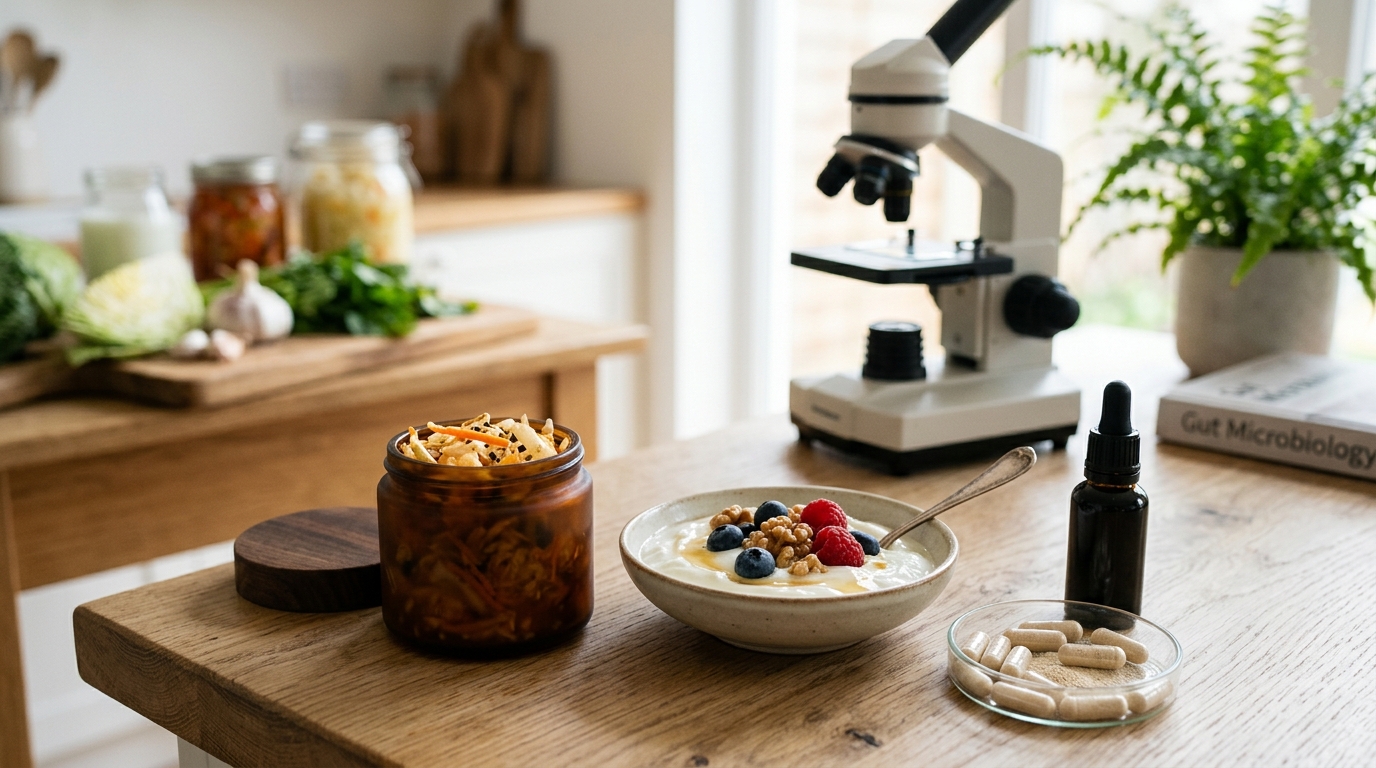
Fermented foods (yogurt, kefir, sauerkraut, kimchi) contain live beneficial bacteria. Regular consumption supports microbiota. Probiotic supplements contain bacterial strains in isolated form. Benefits are less clear than whole fermented foods, but specific strains show benefits for specific outcomes.
Optimal approach: prioritize fermented foods as primary source, add supplements only for specific conditions with research support.
Prebiotics: Feeding Good Bacteria
Prebiotics are non-digestible fibers that selectively feed beneficial bacteria. Common sources: inulin (chicory, garlic, onions), FOS (bananas, asparagus), beta-glucans (oats, barley).
Prebiotics without beneficial bacteria present are less effective. The combination matters.
Disruptions to Microbiota
Antibiotics: Indiscriminate bacterial killing (beneficial and harmful). Recovery takes months. Processed foods: Low fiber, high sugar—feed harmful bacteria. Stress: Alters microbiota composition. Sleep deprivation: Reduces beneficial bacteria.
Minimizing disruption is easier than recovery.
The Timeline
Week 1 of dietary fiber increase: Modest microbiota shifts begin. Weeks 2-3: Symptomatic improvements (better digestion, increased energy). Weeks 4-8: Immune function improvements become measurable. Months 3-6: Significant microbiota stabilization and immune enhancement.
Measuring Microbiota
Stool testing can measure microbiota composition. Most commercial tests show diversity and abundance of major bacterial groups. However, diet-based interventions improve outcomes without requiring testing.
Age and Microbiota
Microbiota diversity naturally declines with age. Older adults with diverse microbiota show better immunity and fewer infections than age-peers with low diversity.
Consistent dietary practices maintaining diversity are protective.
The Practical Protocol
- Increase dietary fiber (30+ grams daily from vegetables, whole grains, legumes)
- Include fermented foods regularly (yogurt, sauerkraut, kimchi)
- Minimize processed foods
- Manage stress and prioritize sleep
- Avoid unnecessary antibiotic use
These practices directly support immune-protective microbiota.